in this article
- 1. AI in repetitive steps, people at the center.
- 2. Transparency when AI appears in the video
- 3. Vertical from the recording
- 4. Series instead of the big annual video.
- 5. Video case study as proof in B2B sales
- 6. Personalized video at scale
- 7. Accessibility as a standard
- 8. Track-based training and microlearning
- 9. Studio for producing in volume
- 10. Measurement linked to the result
- What remains the same
- How to prioritize changes based on company size.
- What changes in the budget?
- Frequently Asked Questions
- Incorporate the changes into your year's plan.
By 2027, video production in companies will be divided between what AI already does well and what will continue to depend on people. This guide brings together the changes worth including in your New Year's plan and what to do with each one.
We avoid making baseless predictions. The points below are changes that are already appearing in corporate video production and that affect the budget, timeline, and format of videos in 2027.
Quick summary:
- Subtitles, transcripts, versions in other languages, and editing have become faster with AI. Scriptwriting, directing, and recording with real people remain central.
- Vertical video is no longer an adaptation; it's now planned during recording.
- Short, continuous series are replacing the large annual video in many companies.
- In business-to-business sales, case study videos have gained importance. as proof of results.
- Subtitles and sign language have become standard in internal communication.
1. AI in repetitive steps, people at the center.
AI tools have shortened the mechanical parts of production. Transcribing an interview, generating subtitles, translating into other languages, finding excerpts in a long recording, and assembling cuts for social media now take a fraction of the time it used to.
Scriptwriting, direction, choice of speakers, and recording with real people are the key elements that lend credibility to a video. An AI-generated avatar can handle procedural training. However, when it comes to showcasing company culture or client results, it still falls short compared to real people.
What to do in 2027: Revise the budget for versions and subtitles, which should be reduced, and maintain the budget for scriptwriting and filming. We compared the two approaches in... Videos with AI avatars and in AI in post-production.
2. Transparency when AI appears in the video
Synthetic voices, avatars, and AI-generated images are already appearing in corporate videos. Along with them came a demand for transparency: the public wants to know when they are seeing something that has been generated.
Us Video case studies from the Bernoulli AI in Education award., In this version, teachers' speeches are delivered with AI-generated voices and an on-screen notification. This choice protected students' privacy without hiding the feature.
What to do in 2027: Define an internal rule for the use of AI in video: when it is allowed, when notification is required, and who authorizes the use of a person's voice or image.
3. Vertical from the recording
A large portion of corporate videos are viewed on mobile phones, LinkedIn, Instagram, and WhatsApp. Adapting them to vertical format after editing cuts off heads, text, and products from the image.
The change is on set: framing with both formats in mind, leaving room for vertical cropping, and in some cases, filming with a second camera vertically.
What to do in 2027: Include the vertical format in the briefing for every video that goes on social media. See How to adapt videos for vertical format..
4. Series instead of the big annual video.
A corporate video appears once a year and then disappears. A series of short videos, with the same visual identity, keeps the company present all year round and costs less per piece when the recordings are grouped together.
One example is Agile Days series from XP EducaçãoFive content videos with their own set design and scripts that are not date-dependent, so they will remain useful after the event.
What to do in 2027: In your yearly plan, replace some of the individual pieces with series. The Video planning guide for 2027 shows how to group the recordings.
5. Video case study as proof in B2B sales
Business buyers arrive at the meeting after doing their own research. At this stage, a client similar to them sharing their results is more convincing than a presentation from the company itself.
The video case study began to be used by salespeople in proposals, emails, and meetings, and not just on the website. A good example is... TrueChange case study with MRS Logística, designed for the sales team to use in place of reports and slides.
What to do in 2027: Plan at least two or three case studies per year, with clients of different profiles. See 10 examples of testimonial videos.
6. Personalized video at scale
Generating video versions with each person's name, company, or data has become feasible without editing them one by one. The format appears in client welcome videos, event invitations, relationship building campaigns, and prospecting.
Bernoulli used a Customized video for partner schools. The logic works for any company with a known customer or partner base.
What to do in 2027: Choose a relationship campaign to test. Learn more about it. Smart Take.
7. Accessibility as a standard
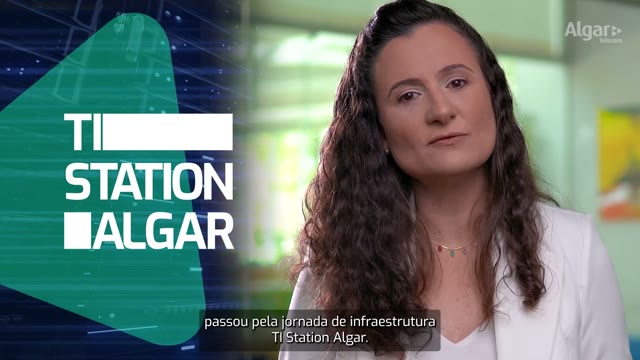
Subtitles are no longer optional: many people watch without sound, and subtitles aid comprehension. In internal communications, training, and campaigns for large companies, sign language interpretation has also become an expected feature.
The A retrospective of the Construtora Barbosa Mello., For example, it was delivered with sign language on all pieces.
What to do in 2027: Include subtitles and sign language interpretation in the budget from the start, instead of requesting them later. See Sign language in corporate videos.
8. Track-based training and microlearning
Corporate video training has moved away from long, recorded lectures. Tracks with short videos, organized by topic and updated in parts, work better for those who learn during work breaks.
For Thoughtworks, in collaboration with CoolHow, we produced... over 90 short microlearning videos in two recording sessions. The soundtrack Compass, from MRS Logística, The same logic applies to the integration of new employees.
What to do in 2027: Break down long training sessions into short modules and plan the updating of each one. See video microlearning.
9. Studio for producing in volume
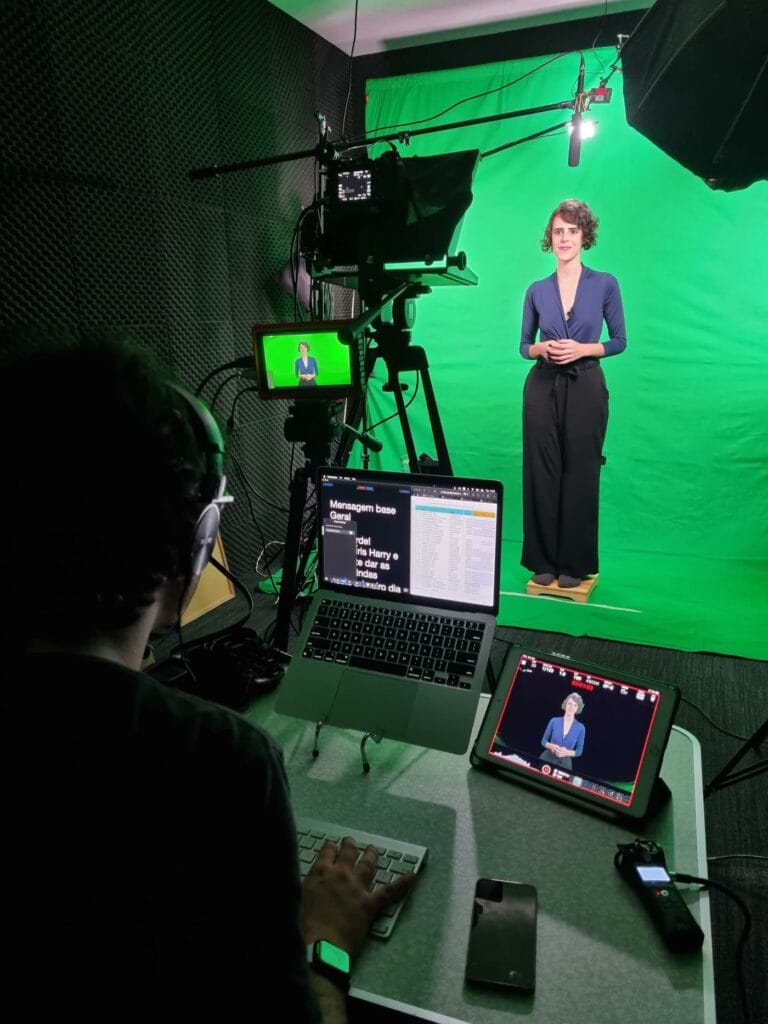
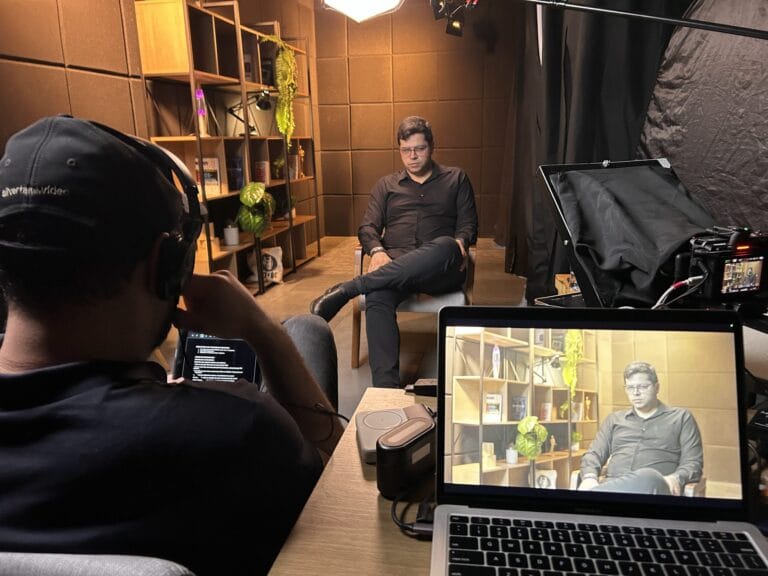
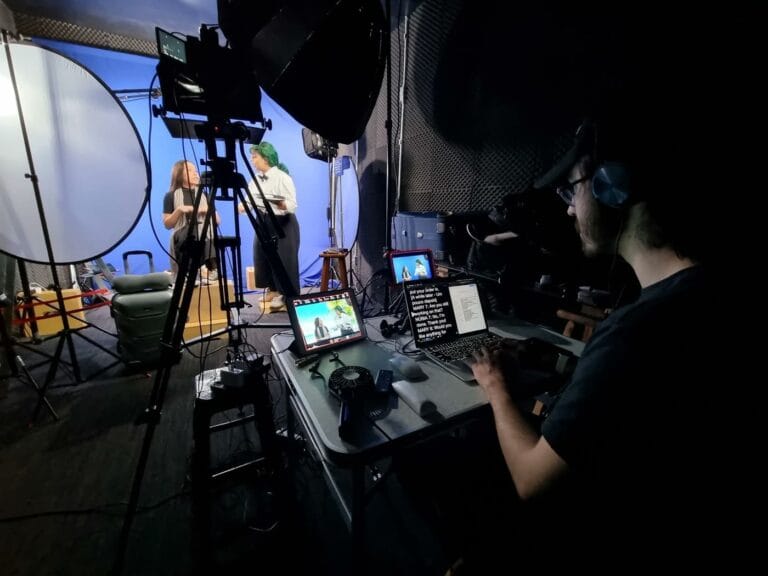
With more videos being released each year, recording in a studio has become essential for video lessons, testimonials, and internal communication. Pre-set lighting, sound, and set design allow for significantly more recording per day than in a converted meeting room.
In the courses of FDC Signature, With a daily production plan and teleprompter, there were days with more than 20 videos recorded.
What to do in 2027: Combine recordings of people speaking to the camera on studio days. Learn more Silvertake's studio in Belo Horizonte.
10. Measurement linked to the result
Visualization remains useful on social media, but it says little about the value of a video case study or training program. More companies have started tracking video in their CRM and training platforms: which opportunities received the case study, how many people completed the training track.
What to do in 2027: Define the metrics for each video before production. We have a metrics table by video type in [link/resource]. planning guide and a guide to distribution and measurement.
What remains the same
Some things don't change with new tools. A corporate video still works when it has a clear message, speaks to a defined audience, and shows evidence instead of adjectives.
Weak scripts continue to generate weak videos, with or without AI. Poor audio continues to cause people to give up in the first few seconds, and disorganized approval continues to delay deliveries. What the new tools do is free up time and budget to better address these aspects.
How to prioritize changes based on company size.
| Size | Start by | Leave it for later |
|---|---|---|
| Small or starting video | Case videos, vertical recording, subtitles | Personalized video, AI avatar |
| Media with structured marketing | Continuous series, CRM measurement, AI versions | own studio |
| Large or with a corporate university | Learning paths and microlearning, accessibility, AI usage rules, studio recording. | high-cost isolated parts without metrics |
No company needs to adopt all ten changes at once. Two or three well-chosen ones can already change the year's results.
What changes in the budget?
| Item | Trend for 2027 |
|---|---|
| Subtitles, transcripts and versions in other languages | cheaper and faster with AI |
| Cuts for social media | cheaper when planned during recording |
| Screenplay and direction | They are still necessary; that's where quality is decided. |
| Recording of real people | similar cost; yields more when grouped together. |
| Accessibility | becomes a fixed item in the budget |
| Measurement | It requires combining metrics with sales and HR. |
The price ranges by video type are in How much does a video cost?, and examples of annual budgets, in video budget for 2027.
Frequently Asked Questions
Will AI replace corporate video production?
It already replaces repetitive parts, such as captions, transcripts, and versions. Videos that rely on real people, credibility, and emotion, such as corporate videos and case studies, still require scripting, directing, and recording.
Is it okay to use AI avatars in training?
For procedures, frequent updates, and content in multiple languages, this might be worthwhile. For topics related to culture, leadership, or anything that requires connecting with the audience, real people work better. Warn viewers when the presenter is AI-generated.
Which video formats should be prioritized in 2027?
Those who work year-round: case study videos for sales, updated corporate videos, onboarding and training tracks, and an ongoing series for social media.
Do I need an AI usage policy for video?
Companies that frequently publish videos benefit from a simple rule: when can AI be used, when does its use require disclosure, and who authorizes the use of people's voices and images.
Can short videos replace long ones?
No. Short videos attract and maintain engagement; longer videos, such as case studies, lessons, and webinars, provide in-depth information for those already interested. See short or long videos.
Does vertical video replace horizontal video?
No. Horizontal graphics remain on the website, in presentations, on large screens, and on YouTube, while vertical graphics are added for mobile and social media. Plan both in the same recording.
Incorporate the changes into your year's plan.
None of these changes require a larger budget. They do require a different allocation: less funding for repetitive tasks, more attention to scripts, grouped recordings, and pre-defined metrics.
If you are finalizing the 2027 plan, Tell me what you need. And we helped incorporate those changes into the year's videos.
Published on October 1, 2026

Samuel Silva is the co-founder and Creative Director of Silvertake Vídeo, a video production company in Belo Horizonte. He leads a team that combines creativity and technology, delivering over 7,000 videos for more than 100 companies. A graduate in Advertising from PUC Minas, Samuel specializes in marketing, creative automation, and audiovisual production.