

in this article
Your employee clicks the link for the new mandatory corporate training. The timer at the bottom of the player shows 52 minutes. Immediately, an invisible but extremely strong barrier of resistance arises. They click play, silence the browser tab, and open their email inbox in another screen to respond to pending clients. This is the silent funeral of a large part of the T&D (Training and Development) budget in companies today. To break with this chronic inefficiency, the video microlearning It emerges as the only viable alternative for training teams efficiently and without creating friction in the work routine.
The fundamental error of traditional corporate education is believing that technical depth requires long sessions. It doesn't. It requires clarity and the ability to synthesize information. Trying to cram an entire process manual into a single one-hour class is a waste of time for those who produce it and a waste of focus for those who consume it. When learning is broken down into smaller doses, content retention skyrockets because the brain doesn't have to deal with the overload of irrelevant information for that exact moment in the task.
The science behind the 180 seconds
Neuroscience explains this dynamic quite simply through the theory of cognitive load. Our working memory has a limited capacity to process new data simultaneously. When you expose a professional to dense content for more than 10 or 15 minutes, the attention span drops drastically. In videos ranging from 3 to 5 minutes, focus remains high. The user consumes the information, processes the central concept, and is able to apply it immediately to their daily work.
Another determining factor is learning at the point of need (or just-in-time learning). A support analyst doesn't want to attend a complete course on systems architecture when they only need to resolve a specific issue regarding API integration. They need a... technology-focused video that answers that question precisely in 3 minutes. If the content is structured surgically, the training ceases to be an isolated event on the annual calendar and becomes a natural part of the company's daily workflow.
The anatomy of a surgical microlearning video
It's not just about taking a long video and randomly cutting it into pieces in editing software. That's patchwork, not learning design. To create a functional microlearning ecosystem, the roadmap needs to be built on the premise of a Single Learning Objective. Each video solves one problem—and only one.
If the focus of the training is to teach the sales team how to overcome price objections, the video shouldn't waste time explaining the company's history or the product's institutional mission. Get straight to the point of friction. The ideal script structure for this format eliminates empty greetings and lengthy introductory vignettes. The first 10 seconds should present the real problem, the next 2 minutes deliver the solution method visually, and the final seconds reinforce the next practical step for the employee.
The crucial role of dynamic visual design.
In such concise formats, the aesthetics and pacing of the editing need to work in an integrated way to guide the viewer's eye. Well-applied graphic resources prevent the viewer from becoming distracted. The use of videos with motion graphics It helps to materialize abstract data, process flowcharts, and system dynamics that would take minutes to explain verbally alone. The image accelerates understanding and fixes the message permanently.
Microlearning formats that really perform in the B2B environment
Not every message should be delivered in the same way. Identifying the correct format for each type of delivery optimizes the production and consumption of corporate training. The main formats that generate measurable engagement include:
- Pills from experts: Short testimonials from company leaders or technicians teaching a specific field practice, ideal for disseminating internal culture and tactical knowledge not found in manuals.
- Focused screencasts: Dynamic screenshots that teach you how to use a tool or new software feature in just a few clicks, very common in the onboarding of new technologies.
- Concept animations: Quick visual narratives to explain compliance rules, new information security policies, or complex regulatory dynamics without boring the team.
The ease of updating and the cost of maintaining the content.
Corporate training programs are not static. Systems change, processes are optimized, and compliance rules are updated year after year. When your company invests in long courses, with extensive modules of more than 40 minutes, any small operational change requires immense rework in re-recording, re-editing, and re-uploading the material to the company's LMS platform.
By choosing training video In microlearning format, this operational problem ceases to exist. If a step in a logistics process changes, you only need to re-record the corresponding 3-minute segment. The rest of the learning path remains intact. This drastically reduces recurring content maintenance costs and ensures that your L&D team can keep the knowledge base always up-to-date in record time.
Silvertake's content engineering for corporate education.
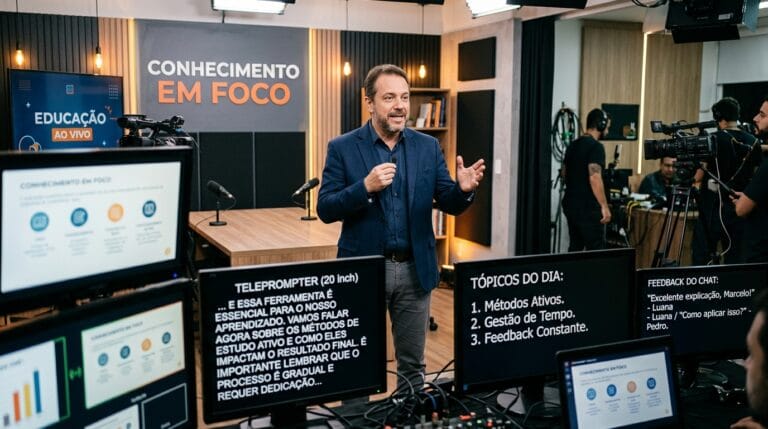
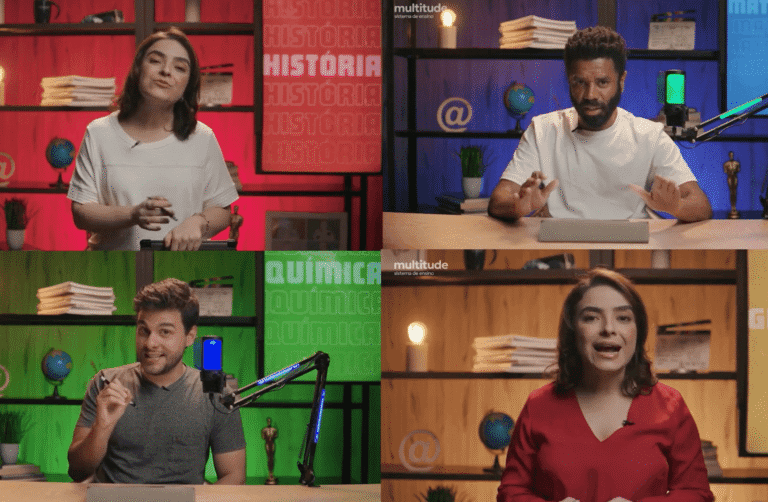
Changing the training culture of a large company requires a strategic partner who understands screen design and retention rates. At Silvertake, we don't just turn on the camera; we structure intelligent corporate narratives. We analyze your business's technical information load to create dynamic and easy-to-understand scripts, applying this directly to the development of... Videos for courses and distance learning..
We cater to demands of varying complexity in corporate education sector and the service market, always focusing on solutions that generate real indicators of training completion. We invite you to explore our complete portfolio from institutional, corporate, and educational video projects to understand how we apply this visual dynamic in practice.
If your employees are still ignoring dense content sent via email, or if your learning path progress metrics are stuck, the format is the main bottleneck. We can help redesign this experience from start to finish, bringing dynamism, conciseness, and impact to your internal training.
How about transforming that complex manual into a modern, agile, and performance-focused learning path? Schedule a quick meeting. with our team of experts or Contact us to send your briefing.. Let's create videos together that your team will actually watch from beginning to end.
Published on May 21, 2026

Samuel Silva is the co-founder and Creative Director of Silvertake Vídeo, a video production company in Belo Horizonte. He leads a team that combines creativity and technology, delivering over 7,000 videos for more than 100 companies. A graduate in Advertising from PUC Minas, Samuel specializes in marketing, creative automation, and audiovisual production.