in this article
Two quotes for the same script come in absurdly far apart. One asks for R$25,000 and the other charges R$90,000 for the same Corporate video production.
This gap comes from practical decisions: set shoot days, machine time, number of professionals mobilized and the complexity of the graphic finishing.
Without understanding where each cost goes, the marketing team risks paying for technical redundancies or cutting critical items needed for delivery quality.
Where the budget is concentrated in the production spreadsheet
In B2B projects, costs are split in clear proportions across the stages. Understanding that split avoids surprises when approving the commercial proposal.
| Cost line | Average impact | What drives the cost up | How to balance it |
|---|---|---|---|
| Capture shoot days (set) | 35% to 45% | Multiple locations, inflated crew and overtime | Lean shooting plan and a dedicated studio |
| Post-production and motion graphics | 25% to 35% | 3D animations, endless revisions and urgent deadlines | Validated script and a clear approval flow |
| Specialized technical crew | 15% to 20% | Senior directors of photography, sound mixers and gaffers | Size the crew to the project's real scale |
| Logistics, rights and location | 10% to 15% | Air travel, paid actors and expensive locations | Use of internal spokespeople and your own locations |
Each of these lines requires direct analysis before pre-production begins.
1. Extra shoot days and set time
The cost of a shoot combines crew fees, space rental, equipment transport, meals, insurance and technical hours. Each additional day multiplies all of these values as a block.
When the script splits scenes across distant addresses, the useful camera time plummets. The crew spends hours taking down lights and facing traffic instead of filming.
Concentrating interviews and supporting shots in the same location or in a studio preserves the budget without compromising the look. Understanding the phases of corporate video production shows how detailed pre-production prevents extra set spending.
2. Post-production: visual finishing and revision control
The editing, color correction, sound mixing and graphics stage can account for more than a third of the total budget. It concentrates edit suite hours that multiply according to the level of finish required.
Two factors make this phase more expensive: graphic complexity and disorganized rework. Technically recreating digital interfaces or 3D elements requires specialists focused for weeks.
To present software or infrastructure solutions without filming physical facilities, the motion graphics handles the need with agility. To keep costs under control, the process depends on a formal alignment flow, detailed in the article on video versioning and approval.
3. Technical crew: sizing by type of deliverable
The number of professionals on set should match the technical demands of the script. An undersized crew compromises lighting and sound, while an inflated setup makes the project more expensive without a proportional visual gain.
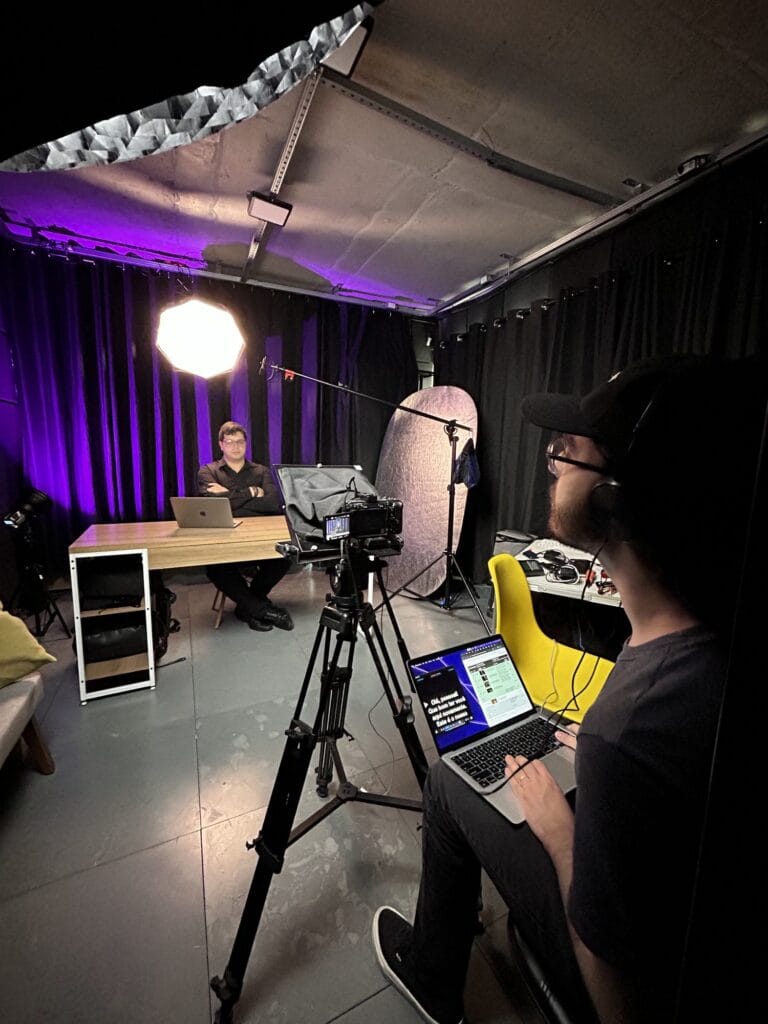
Recording a testimonial in a corporate office doesn't require trucks of heavy equipment. The operation only needs dedicated audio capture, suitable lenses and controlled lighting.
Assessing the real need for each role prevents unnecessary expenses. Our guide on Mistakes to make when budgeting projects with an audiovisual production company. details how to identify disproportionate costs in the proposal.
Budget structuring without waste at Silvertake
Planning a Corporate video production at Silvertake is based on the intended commercial deliverable, eliminating technical resources with no direct use.
For projects for industry and technology companies, we organize the shoot plan to capture the greatest volume of content during a single crew mobilization.
In the production for TrueChange, on the MRS Logística case, we combined interviews and operational footage into a single shooting cycle, with no repeated crew travel.
Coordinating schedules made it possible to film interviews with leaders and industrial shots while keeping the budget strictly at the planned ceiling.
In a corporate video production or in training modules, setting the scope in advance protects the budget against deviations during execution.
Planning the next project
Approving an audiovisual budget depends on clarity about the technical assumptions, avoiding blind cuts or excessive hiring. With a well-defined scope, the investment respects the schedule and the company's goal.
To structure the right sizing for your next shoot, send your brief to the Silvertake team. Our team reviews the requirements of the request and drafts a detailed proposal for your production.
Published on October 5, 2026

Samuel Silva is the co-founder and Creative Director of Silvertake Vídeo, a video production company in Belo Horizonte. He leads a team that combines creativity and technology, delivering over 7,000 videos for more than 100 companies. A graduate in Advertising from PUC Minas, Samuel specializes in marketing, creative automation, and audiovisual production.