
Understand how to structure a corporate video approval framework to avoid endless rework, budget overruns, and save your project deadline.
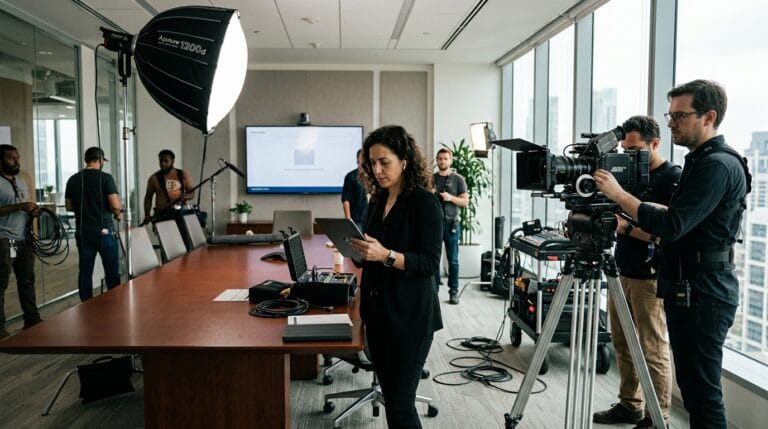
You receive the link to “Institutional_Video_V1.mp4”. You watch it and love it. The soundtrack works, the script is polished, the brand message aligns with the semester's plan. So, you forward the file to the product team, the sales director, compliance, and the CEO. Two weeks later, your inbox is a graveyard of disjointed emails and conflicting opinions.
The legal department asked to change a comma in the title card at 1:12. Marketing thought the color of the graphics was a bit dull. The sales director decided the scene order needed to be reversed to highlight a new feature. And the CEO simply sent a WhatsApp audio message saying the video “needs more energy.” Welcome to video hell. video versioning corporate.
When you get to the file named “Final_Video_FINAL_now_it_will_happen_V15.mp4”, the project budget has been blown, the original deadline has been missed, and the material has completely lost its fluidity and initial impact. The result is an audiovisual Frankenstein assembled to please everyone, but which doesn't communicate with anyone.
The problem isn't with the technical team or the chosen production company. The structural error lies in treating the approval of a B2B video piece as if it were the collaborative editing of a text document. Video doesn't accept "infinite asynchronous suggestions" without taking a chunk out of your profit margin and your mental health. Rearranging a soundtrack, redoing a graphic animation, or altering a hard cut because someone had a late idea costs time and money. You need a method. You need a tactical approval framework.
Before implementing a process, it's necessary to understand what happens on the other side of the screen when you ask for "just one more quick change." Editing a video isn't about deleting a word and typing another. Audiovisual media is an interdependent web. If you remove five seconds of dialogue in the middle of a video, the editor needs to readjust the tempo of all subsequent scenes, recompose the soundtrack so that the climax of the music matches the ending, and redo the... color grading (color correction) of the newly inserted cuts.
Each new round of adjustments requires the project to be reopened, altered, re-rendered, exported, compressed, and uploaded to the cloud again. If your process doesn't limit and organize this feedback, you're essentially paying the production company to manage your own company's internal chaos.
To scale your production and ensure projects are delivered on time with high technical quality, it's necessary to secure the review pipeline. Follow these four essential rules.
The true V0 of any project is the script. It's on paper that the magic (and the cheap changes) happen. If the product team needs to validate technical jargon, or if the legal department needs to attest to the compliance of a market claim, this is the moment. Forcing structural message changes when the video has already been captured or animated is the fastest way to V15. No cameras should be turned on and no keyframes should be animated before all the... stakeholders have given their approval to the script and storyboard.
If ten people have veto power and send their comments directly to the editing suite, the video will never be finished. Marketing wants the scene slower, sales wants it faster. The editor is paralyzed. The golden rule is: your company needs a single feedback consolidator. All departments send their scores to the project manager. This professional is responsible for reading everything, resolving internal contradictions, cutting out absurdities, and sending the production company only a unified, clear, and coherent list of changes.
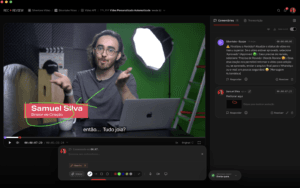
Writing “in that part where the building appears, remove the girl in the background” in an email thread is a recipe for disaster. The editor will misinterpret it, alter the wrong scene, and generate a useless new version. Video feedback demands surgical precision. That's why we... We developed RecReview, our video approval platform.. In this system, the client clicks on the screen at the exact second and frame they wish to change, and types a comment, which becomes a visual marker for the editing team. Everything is recorded, documented, and centralized. No more spreadsheets and lost audio messages in chat.
To review a video efficiently, Your approval committee needs to understand what to evaluate at each stage. Establishing a limit of three organized versions saves the project.
The theory sounds excellent, but how does it hold up when complexity increases? We've produced dozens of projects for the... industry sector, In a field where technical image accuracy is non-negotiable, a piece of equipment rotating the wrong way in an animation invalidates all of the company's training or sales materials.
Take the case of An explanatory video in motion graphics that we created for the Opta Group.. The challenge was to translate highly complex steelmaking processes for a global technical audience. Develop motion graphics videos It requires the creation of dozens of illustration layers, information hierarchy, and precise on-screen reading timing. If we hadn't implemented a rigid framework from the technical script and storyboard, validation with the company's engineering team would have taken months and resulted in dozens of wasted renderings.
By applying rigorous alignment during the scriptwriting phase and consolidating precise notes in the V1 and V2 rounds through our platform, we are able to deliver dense, aesthetically refined, and surgically precise material without wearing down the client's team with unnecessary back-and-forth communication.
Producing corporate audiovisual content demands predictability. Scaling your B2B communication, whether for marketing, training, or internal culture, requires treating editing as an industrial process, not as an endless, handcrafted collage. When your company adopts a clear approval framework, the team's focus shifts to the distribution strategy, instead of micromanaging commas on the computer screen.
If your current operation is bogged down in countless versions and constant delays, the solution isn't to hire more editors. It's to change how you work with your production company. Want to understand how we can structure your brand's audiovisual content efficiently and using a practical method? Send a briefing to Silvertake. And we will build projects that deliver results from the very first version.
Request a Quote