in this article
- The steps in a table
- The steps, one by one.
- Who approves each step?
- Schedule of a recorded institutional event.
- Timeline of an animation
- What changes in the animated video?
- What changes in distance learning?
- How to speed things up without sacrificing quality.
- Common mistakes in video production
- Frequently Asked Questions
- With each step combined, the deadline is met.
The production of a video goes through briefing, proposal, script, pre-production, recording, editing, motion graphics, sound, review and delivery, and then comes distribution. A recorded institutional video takes 4 to 8 weeks to produce, and a short animation takes 3 to 5 weeks.
In this guide, each step is outlined, including what happens, what the client delivers or approves, and the target deadline. Following this are two complete timelines, the differences between e-learning and animation, examples of real projects, and what can be done to accelerate the process without sacrificing quality.
Quick summary:
- The client is involved in almost every step. The most common delays come from approvals that take a long time.
- Approving the script before filming is what best protects the deadline and the budget.
- In animation, the voice-over is recorded before animation because the rhythm of the animation follows the voice.
- Two rounds of review resolve most projects, provided the comments are consolidated.
- This online course is a mass production: 2 to 4 months, with the graphic design and set design package approved before the first class.
The steps in a table
| Step | What happens | The customer delivers or approves. | Reference deadline |
|---|---|---|---|
| 1. Briefing | meeting and document specifying objective, audience, channel, deadline, and budget | delivers the briefing and materials | 1 to 3 days |
| 2. Proposal | format, scope, schedule and price | approves the proposal | 2 to 5 business days |
| 3. Itinerary | text and description of the scenes | reviews and approves the script | 1 to 2 weeks |
| 4. Pre-production | locations, schedule, crew, cast, graphics package, shooting plan | confirms schedule, access and people | 1 to 2 weeks |
| 5. Recording | daily set | He accompanies and clears the location. | 1 to 3 days |
| 6th Edition | assembly of the first cut | Nothing, until the cut is made. | 1 to 2 weeks |
| 7. Motion | lettering, graphics, charts and animations | provides final data and texts | 3 to 10 days, in parallel |
| 8. Sound | voice-over, soundtrack, mixing | approves voice and soundtrack | 2 to 5 days, in parallel |
| 9. Review | adjustments based on feedback | sends consolidated comments | 1 to 2 weeks |
| 10. Delivery | final versions, formats and subtitles | approves the final version | 2 to 3 days |
| 11. Distribution | publication, cuts and measurement | publishes and monitors the numbers | continuous |
Some stages happen simultaneously. Motion and sound, for example, begin while the editing is still being put together. That's why the total time in the table exceeds the total timeframe of the schedules below.
The steps, one by one.
1. Briefing
The project begins with a conversation and a short document: what the video needs to solve, its target audience, where it will be shown, by when, and with what budget. The client provides the briefing and any existing materials, such as presentations and brand guidelines.
We have a video briefing template Ready to copy, with filled-in examples.
2. Proposal
The production company will provide the suggested format, the deliverables, the timeline, and the price. This document will guide everything, so it's worth checking the number of videos, duration, versions, and review rounds.
Who approves: whoever has the budget. If the director needs to sign, he needs to see the proposal now, not just the finished video.
3. Itinerary
The script outlines the spoken text and describes what appears in each scene. In interviews and testimonials, it becomes a script of questions and a planned structure for editing.
The client reviews the content and checks data, names, and technical terms. Script approval is the most important part of the project: changing a single sentence here costs minutes, and after filming it may require an additional day's work. See the importance of the script.
4. Pre-production
This involves planning the set: locations, cast and crew schedules, technical team, cast, costumes, makeup, permits, and the hour-by-hour shooting schedule. In projects with a distinct identity, the graphic design package and set design are approved at this stage.
The client confirms the spokespeople's schedules, grants access, and informs them of site rules, such as the use of PPE in the factory. More details at [link/website/etc.]. pre-production of corporate videos.
5. Recording
The team sets up the lighting, sound, and cameras, records the dialogue, and captures supporting images. A small institutional video can be filmed in one day; projects with multiple locations or many interviewees require two or three days.
Someone from the client's team accompanies the set to clear spaces, provide guidance on what can be shown, and validate lines on the spot. For those who will be speaking on camera, read [link/reference]. How to manage executives on video.
6th Edition
The editor selects the best shots and assembles the story following the script. The result is the first cut, with a provisional soundtrack and no final edit.
The client has no task here, other than answering specific questions. It's a good time to gather those who will review the material and agree on how the comments will be sent.
7. Motion
This includes lettering with names and job titles, graphics cards, charts, system screens, and animations. In projects with motion graphics, This step can be as big as the recording itself.
The client provides the final numbers and text that will appear on the screen. Incorrect data in the chart requires animation rework, so it's worth checking beforehand.
8. Sound
Licensed soundtrack, voiceover, noise reduction, and mixing. When voiceover is included, the voice is chosen by the client based on auditions. To estimate the cost and time for text production, use the [feature/tool - context needed]. speech calculator.
9. Review
The client watches and comments. The production company adjusts and sends the new version. Two rounds resolve most projects when each round arrives with comments from all reviewers together, without contradictions.
Comments with timestamps, on a review platform, avoid the "that middle part". See the video approval workflow and How to get approved without reaching V15.
10. Delivery
Once the cut is approved, the final versions are released: horizontal, vertical, with and without subtitles, with and without narration, and in other languages when desired. The client approves the final version and receives the files in the format required by each channel. Delivery checklist It helps to not forget anything.
11. Distribution
The video needs to reach its audience: website, LinkedIn, YouTube, email, ads, event, course platform. Plan the cuts for each channel along with the script, because it's easier to record with them in mind. More at [link/resource] Video distribution and measurement.
Who approves each step?
From the client's perspective, three roles appear in almost every project. Defining them in the briefing prevents someone from showing up in the final version asking to change everything.
| Step | Project owner (marketing, HR, T&D) | Specialist (technical, legal, compliance) | Decision maker (director, sponsor) |
|---|---|---|---|
| Proposal | negotiate | does not participate | approves |
| Road map | review | validates data and terms | approves |
| Pre-production | approves agenda and locations | grants access and rules | only if it appears in the video |
| First cut | consolidates comments | check information | comments |
| Final version | check deliveries | validates mandatory notices | approves |
Schedule of a recorded institutional event.
Reference for a 2-3 minute video with interviews and supporting footage, recorded over one or two days. The total timeframe is between 4 and 8 weeks.
| Week | Production company | Customer |
|---|---|---|
| 1 | briefing meeting, proposal | sends materials, approves proposal |
| 2 | script and script of questions | revise the script |
| 3 | script adjustments, pre-production, technical visit | approves itinerary, confirms schedule and locations. |
| 4 | recording | follows the set |
| 5 | First cut editing, motion graphics, soundtrack | brings the reviewers together |
| 6 | first cut sent | sends consolidated comments |
| 7 | second version, final color and mix | approves the final version |
| 8 | versions, subtitles and delivery | receives and publishes |
Com aprovações rápidas e agenda de gravação livre, esse cronograma encolhe para 4 ou 5 semanas. Como referência de mercado em 2026, com impostos, um institucional com gravação (1 vídeo de 2 a 3 minutos, com 1 diária de gravação) fica entre R$ 8 mil e R$ 20 mil.
Institucional · 3:11 · see the case
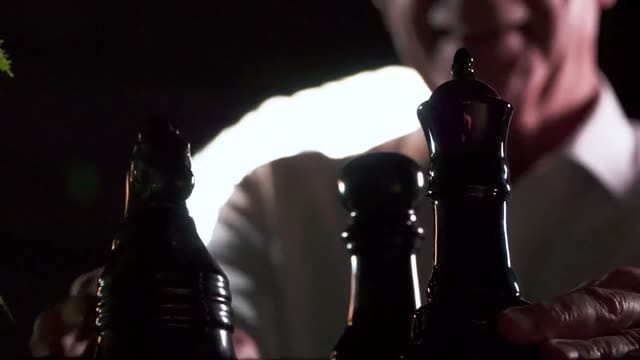
No vídeo de 10 anos da Geocontrole, a gravação juntou entrevistas com pessoas da equipe e cenas do dia a dia na sede. Na edição, os depoimentos e as imagens da rotina foram montados em uma única história sobre a década da empresa.
Timeline of an animation
Referência para um vídeo em motion graphics de até 2 minutos. O prazo total fica entre 3 e 5 semanas.
| Week | Production company | Customer |
|---|---|---|
| 1 | briefing, proposta, roteiro | aprova proposta, revisa roteiro |
| 2 | locução, styleframes (quadros de estilo) e storyboard | aprova roteiro, voz e estilo visual |
| 3 | animation | aguarda |
| 4 | primeira versão com trilha e efeitos | sends consolidated comments |
| 5 | ajustes e entrega | approves the final version |
A diferença para o vídeo gravado está na ordem. O roteiro e a locução são aprovados antes de animar, porque cada cena é desenhada no tempo da voz. Trocar uma frase depois da animação pronta significa refazer as cenas daquele trecho.
What changes in the animated video?
- Não há gravação. O tempo de set vira tempo de desenho e animação.
- Styleframes substituem a visita técnica. São quadros estáticos que mostram o visual antes de animar, e aprová-los evita surpresa estética.
- A locução vem antes. Uma locução guia pode ser usada para testar o ritmo, e a definitiva entra antes da animação.
- Dados e textos precisam estar fechados. Cada número na tela é animado, e mudar depois dá trabalho.
Animação whiteboard · 4:39 · see the case
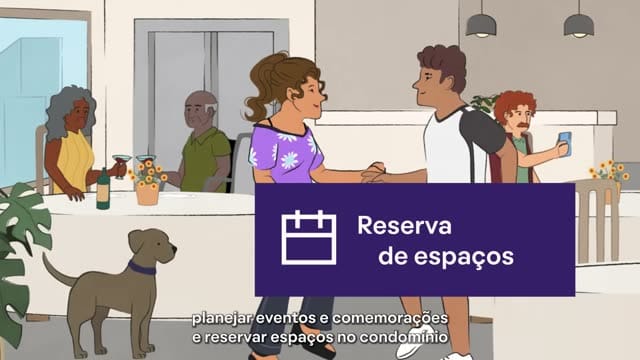
Na animação para o FGV CEIPE e a Petrobras, o processo começou pelo estudo do tema com a equipe do FGV CEIPE. Depois vieram o roteiro em linguagem para não especialistas, a animação, a sincronização com locução e trilha e as rodadas de revisão com o cliente.
Para escolher o estilo, veja os tipos de animação e a nossa produção de vídeo animado.
What changes in distance learning?
Um curso é produção em série, com dezenas de aulas e o mesmo padrão do início ao fim. O prazo de referência é de 2 a 4 meses.
| Step | Vídeo único | Online course |
|---|---|---|
| Road map | um roteiro | roteiros por aula, com padrão definido e revisão do conteudista |
| Pre-production | locação e agenda | cenografia, pacote gráfico e padrão de aula aprovados antes de gravar |
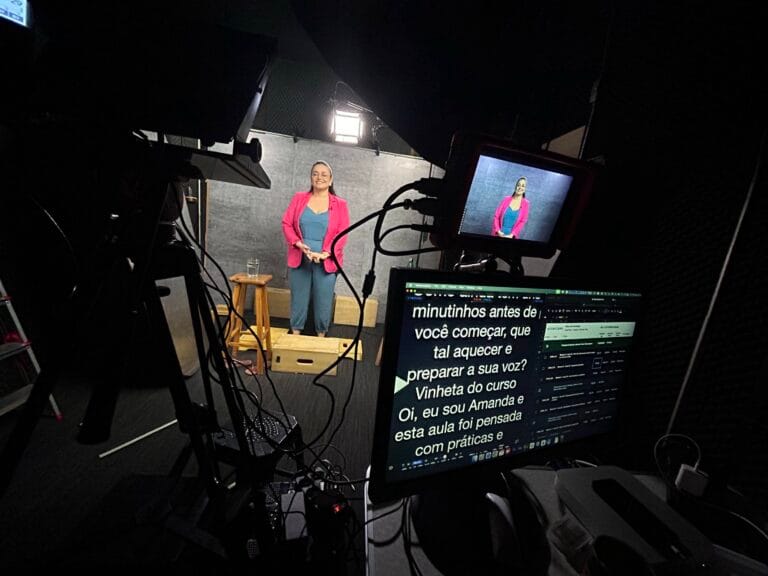
| Recording | uma a três diárias | várias diárias em estúdio, com teleprompter, organizadas pela agenda dos professores |
| Edition | um editor | esteira de edição, com aulas em fases diferentes ao mesmo tempo |
| Revision | por vídeo | por lote de aulas, com planilha de controle |
Trilha de onboarding · 1:04 · see the case
Na trilha Bússola, da MRS Logística, a identidade dos vídeos, as cartelas, as vinhetas e a cenografia do estúdio foram validadas antes do primeiro dia de gravação. A trilha tem mais de 30 vídeos, de 4 a 12 minutos, gravados no estúdio da Silvertake em Belo Horizonte.
No curso de alinhamento de eixos da MGS Pruftechnik, a pré-produção dimensionou cenografia, roteiro e pacote gráfico antes de gravar. As aulas teóricas e práticas seguiram uma estrutura padronizada, com duas câmeras para mostrar a parte prática. Mais em How to produce distance learning at scale. e na nossa produção de EAD.
How to speed things up without sacrificing quality.
- Mande o briefing completo. Cada pergunta que a produtora precisa fazer depois é um dia a mais.
- Defina um responsável do lado do cliente. Uma pessoa recebe as versões, reúne os comentários e responde.
- Combine datas de aprovação na proposta. Se o roteiro chega na segunda, a resposta vem até quarta.
- Reserve a agenda de quem aparece antes do roteiro ficar pronto. Agenda de diretor é o gargalo mais comum da gravação.
- Grave tudo de uma vez. Uma diária bem planejada rende o vídeo principal, os cortes e as imagens de apoio.
- Feche dados e textos antes do motion. Número que muda depois da animação pronta é retrabalho garantido.
- Use uma plataforma de revisão. Comentário com minutagem, num lugar só, resolve em uma rodada o que por e-mail levaria três.
O que não dá para comprimir sem perder qualidade é o tempo de roteiro e o de edição. Projetos com data fixa pedem mais gente trabalhando em paralelo, e isso aumenta o custo. Veja o que colocar no SLA de prazos.
Common mistakes in video production
Gravar sem roteiro aprovado. A edição tenta montar uma história que não foi gravada, e o resultado é nova diária ou vídeo pior.
Apresentar o vídeo ao decisor só no final. Se o diretor não viu o roteiro, ele vai comentar o roteiro na versão final.
Mandar comentários picados. Cinco e-mails de cinco pessoas, com pedidos que se contradizem, viram três rodadas extras.
Mudar o texto depois da locução. Em animação, isso significa regravar a voz e refazer as cenas do trecho.
Forget the versions. Corte vertical, legenda e versão para evento pensados só depois da entrega exigem nova edição.
Tratar a entrega como fim. Sem plano de distribuição, o vídeo fica parado no site. Planeje canais e cortes desde o briefing.
Frequently Asked Questions
How long does it take to produce a video?
Como referência: animação curta, 3 a 5 semanas; depoimento ou vídeo case, 4 a 6; institucional gravado, 4 a 8; VT ou campanha com elenco, 6 a 10; curso EAD, 2 a 4 meses.
How many review rounds are normal?
Duas, na maioria dos projetos. A primeira ajusta conteúdo e estrutura; a segunda, detalhes. Rodadas além das combinadas na proposta podem ser cobradas à parte.
Is it possible to produce a video in a week?
Dá, com escopo pequeno: roteiro curto já aprovado, uma diária, pouca animação e aprovação no mesmo dia. Para um institucional com entrevistas e várias áreas aprovando, o prazo mínimo realista é de 4 semanas.
How many people go to the set?
Depende do vídeo. Uma entrevista simples pede diretor, câmera e som; um vídeo com elenco e várias locações pede equipe maior, com produção, luz e maquiagem. Veja quanto tempo demora para gravar um vídeo.
Does the client need to be on the recording?
Recomendamos que alguém acompanhe, principalmente em empresas com regras de acesso ou informações sensíveis. Essa pessoa decide na hora o que pode aparecer e valida as falas.
At what stage does a change cost the most?
Depois da gravação, no vídeo gravado, e depois da animação pronta, no vídeo animado. Antes disso, a mudança fica no papel.
With each step combined, the deadline is met.
As etapas são as mesmas em quase todo projeto. O que muda o prazo é a clareza do briefing, a velocidade das aprovações e o número de pessoas que precisam dizer sim, e tudo isso se resolve no começo.
Se você tem um vídeo com data marcada, Tell me what you need. e montamos o cronograma de trás para frente com você.
Publicado em 3 de March de 2025 · atualizado em 29 de September de 2026

Samuel Silva is the co-founder and Creative Director of Silvertake Vídeo, a video production company in Belo Horizonte. He leads a team that combines creativity and technology, delivering over 7,000 videos for more than 100 companies. A graduate in Advertising from PUC Minas, Samuel specializes in marketing, creative automation, and audiovisual production.