
Discover what happens when using ChatGPT for training videos. We conducted a hands-on test, comparing the AI script with human direction and highlighting the errors.
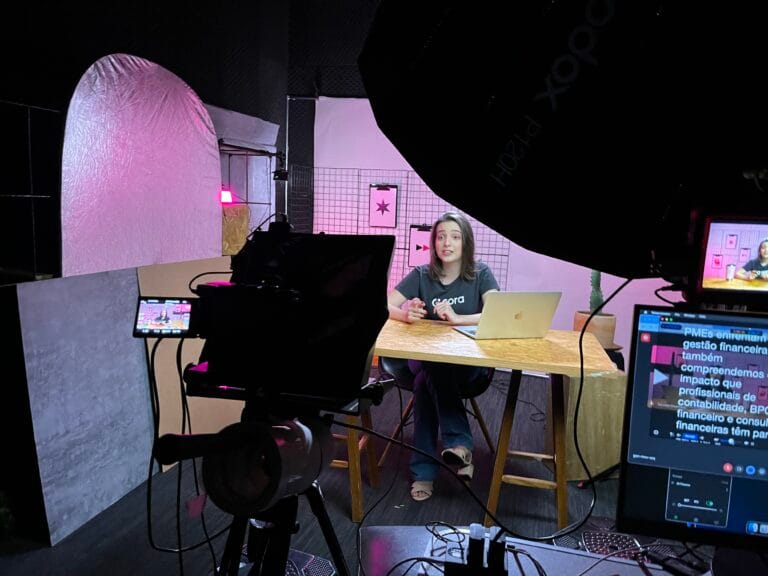
Have you ever tried delegating an entire corporate onboarding module to artificial intelligence to solve on its own? We decided to test this premise at the production company and see how far the technology can go.
We asked the machine to take on the roles of scriptwriter and instructional designer. The practical goal was to find out if the tool could deliver material directly to the film set.
The use of chatgpt for training videos It has become a fixed topic among training and development managers and corporate communications professionals. The market promises to cut down on planning and content scripting time.
The challenge arises when the lights come on and the talent needs to present the text generated by the robot. The result of our experiment revealed structural flaws that no premium license can fix on its own.
We built a rigorous creation process. We requested a three-minute script focused on conflict resolution, specifically aimed at middle-level leadership.
We require gripping hooks within the first fifteen seconds and a brisk pace. We also requested that the tool include on-screen visual cues for each block change.
The first answer appeared on the screen in less than twelve seconds. The macro-level organization of the topics demonstrated the technology's ability to quickly categorize blocks of information.
The model structured the logical steps and delivered a closed conclusion. The theory on paper, however, failed as soon as we tried to apply the text in the studio.
The template eliminates the fear of the blank page. The tool structures entire modules, making it easier to start the recording schedule.
The system functions as a research assistant for those who need to summarize lengthy manuals. It speeds up information sorting and helps organize the content database.
The robot understands. How to transform PDFs and PPTs into video lessons., maintaining the original data hierarchy. The problem begins when converting this logic into spoken language.
The text delivered by the tool was dense and without pauses. The vocabulary seemed to have been extracted from an academic thesis from the nineties, far removed from corporate reality.
The AI miscalculated the timing. The generated script contained approximately 220 words per minute, making it a rushed and unintelligible read. To understand this metric, read our [reference/article/etc.]. A guide on how to calculate video script time..
Audiovisual media demands a rhythm that machines don't understand. Without human direction, the material becomes a large block of text read aloud in front of the camera.
When the robot writes using long sentences full of subordinate clauses, the executive suffers on set. Their breathing becomes labored and the presenter's posture tense.
This rigidity necessitates forced pauses and leads to a mechanical reading style. The performance reveals the overuse of a teleprompter and undermines credibility with the work team.
Adapting the script is necessary so that the person can convey charisma. The machine ignores the cadence of human breathing during recording.
Artificial intelligence has a literal and obvious visual idea bank. If the script addresses the concept of "synergy," the tool's suggestion is the icon of two gears fitting together.
These markings limit the material. In corporate modules, the quality of visual retention depends on the ability to abstract data and processes through animated design, not through repetitive icons.
We ignored all the visual ideas proposed by the robot. The motion graphics team's job is to create dynamic interventions that expand on the reasoning, not just illustrate the narrator's speech.
To illustrate the difference between the robot's text and the final edited script, we have listed the structural points we found in the project.
| Audiovisual Criteria | ChatGPT Version (Raw) | Adaptation of Human Direction |
|---|---|---|
| Language and Tone | Extreme formality, long sentences, and excessive jargon. | Conversational tone, short sentences, and a focus on connection. |
| Reading Pace | 220 words per minute. | 130 to 150 words per minute, with space for breathing. |
| Visual Indications | Literal decisions (example: show image of target with arrow). | Supporting graphic animations that complement the reasoning. |
| Retention Dynamics | Continuous text flow from beginning to end. | Insertion of rhetorical questions and pauses for cuts. |
Producing educational material isn't an assembly line for concise texts. Corporate video demands visual connection and strategic pauses for attention.
When deciding producing distance learning at scale By basing everything on the robot's text, the student abandons the screen. The lack of rhythm penalizes the course completion metric.
We use AI behind the scenes to research story ideas and review raw documentation. The decision about whether to transition that content to the screen remains human.
In creating the microlearning path for Thoughtworks, the practical challenge involved setting a pace that would hold the attention of technical collaborators.
CoolHow/Thoughtworks | Training Videos
Retention depended on the direction, set design, and graphic animation. A text generation tool could not orchestrate this delivery on the set.
The same guiding principle was applied to Arco Educação's material. The language needed to reflect the brand's culture in order to engage internal teams.
Arco Education | Internal Training
In both cases, the training video production He translated theoretical knowledge into a video conversation. The machine provides the theory, and the directors sculpt the rhythm of the material.
AI-based tools deliver mechanical results when placed in the driver's seat. Recording the first script generated by the machine wastes the production budget.
Take advantage of technology to validate topics with experts and organize the module's subjects. Once that's done, pass the raw material on to someone who understands rhythm, lighting, and audiovisual capture.
The team's onboarding experience should not sound artificial. Speak to our team and send us your training and development briefing.. We transformed the draft text into audiovisual material that people watch until the end.
Request a Quote