

Learn how to produce e-learning at scale by structuring an efficient audiovisual production pipeline for corporate training and courses without compromising quality.
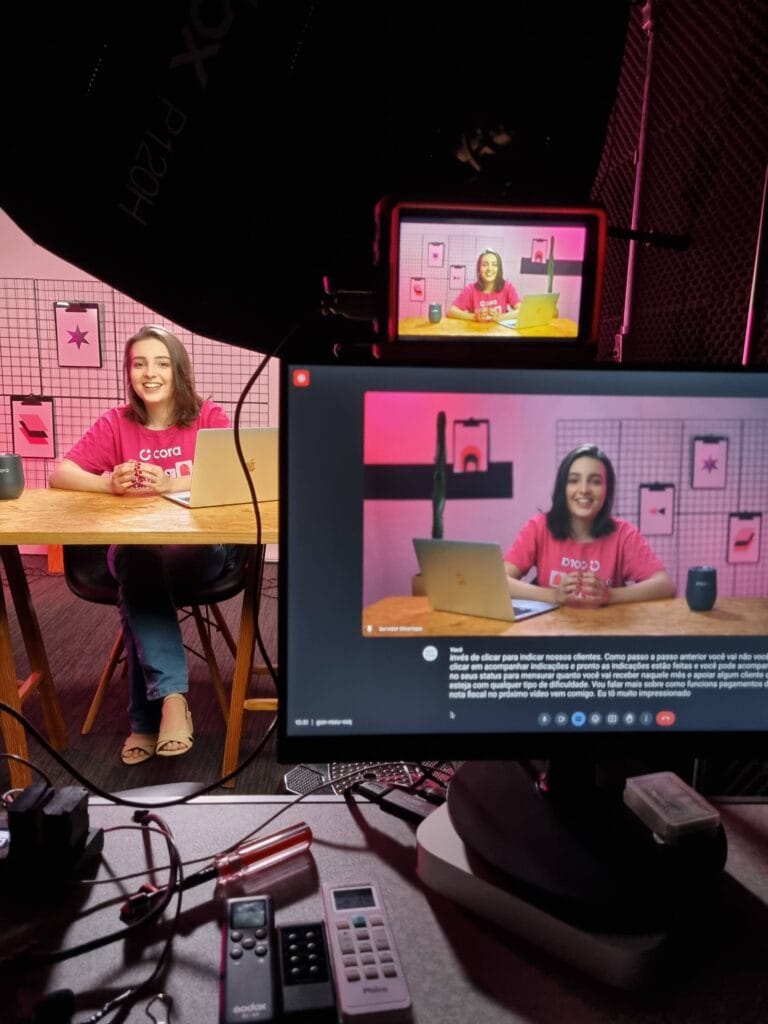
The scene is classic in the L&D or marketing department: the board approves a robust training plan with 40 new courses for the semester. The excitement is huge, until reality hits. By the second month, the technical specialist doesn't have time to record, the editor is bogged down in endless adjustments, and the schedule is already three weeks behind. This is when many realize that the bottleneck isn't a lack of content, but an inability to operationalize the process. If you're trying to figure out... How to produce distance learning at scale. Without turning your operation into creative chaos, you need to stop treating video like crafts.
Corporate video, when produced in isolation, allows for improvisation. But when the goal is to generate dozens of hours of high-quality educational content monthly, improvisation is the fastest path to financial and operational failure. Scale demands method, standardization, and an industrial assembly line approach applied to audiovisual production.
The most common mistake when trying to expand the production of video lessons is focusing on equipment. Managers believe that buying a better camera or setting up a makeshift studio at company headquarters will solve the problem. It won't. The real bottleneck in corporate e-learning is human and procedural.
The expert who possesses the technical knowledge (the "teacher") is rarely a professional communicator. They hesitate in front of the camera, lose focus on the content, and spend hours recording a ten-minute segment. Without a clear preparation process, the recording drags on, overburdening the editing team who will need to salvage the material in post-production. If your company wants to grow its training catalog, it needs to shift its focus from technology to workflow.
To enable robust production, each step of the process needs to be broken down and simplified. This is what we call a production line. It rests on three fundamental pillars:
This level of standardization ensures brand consistency throughout the entire learning ecosystem, which is vital for the perceived value by the employee or end customer consuming the content.
Technology professionals, CFOs, or engineers master the technical content, but freeze when they see the red camera light turn on. Forcing them to memorize long texts is a recipe for disaster. The solution to speed up the process lies in creating dynamic scripts and intelligently using support tools.
Using a teleprompter (TP) adjusted to the presenter's natural speaking pace solves many of the recording problems. However, the TP text cannot be an academic article transposed onto the screen; it needs to be written for spoken language, with short sentences, clearly marked pauses, and conversational tones.
If the shooting was well-planned, post-production is where we consolidate speed. Companies that try to manage this internally often fail in asset management and lack project standards. When volume increases, the lack of organization leads to endless rework and loss of files.
To maintain a healthy workflow, editing should follow a strict folder hierarchy, use proxies to speed up the cutting of large 4K files, and implement a centralized video approval workflow. professional video review platforms like the RecReview, This feature, where the client or teaching staff can comment directly on the video timeline, eliminates confusing email exchanges with inaccurate timestamps and speeds up the final delivery time by up to 40%.
Thinking about scale also means thinking about the future of the content. One of the biggest mistakes in producing corporate e-learning is recording massive blocks of information that quickly become obsolete. If an internal process in your company changes, you don't want to have to re-record an entire five-hour course. By planning lessons in short, independent modules, you can replace only the video fragment that has changed, keeping the rest of the curriculum active and up-to-date without significant additional costs.
Many companies fall into the trap of trying to internalize all distance learning production. They hire a junior editor, buy basic equipment, and expect cinematic results. The result is an overworked professional acting as screenwriter, camera operator, lighting technician, and editor, generating amateur-quality videos with slow turnaround times.
Having a partner specialized in video production for courses and distance learning It allows your team to focus on what really matters: the pedagogical strategy and the technical content. The production company absorbs operational stress by applying consolidated scaling processes, professional studios, and editors focused on productivity.
Whether it's for structuring corporate training videos for your sales team or to develop the entire curriculum of a platform in education and digital products sector, The key is to focus on the intelligence of the process, not just the mechanical execution.
Producing dozens of hours of high-quality technical and visual training doesn't have to be a management nightmare. Scale ceases to be an issue when you replace individual effort with predictable processes, intelligent templates, and the right partnership.
If your educational content pipeline is stalled, or if you need to launch a large-scale project with the assurance that deadlines and quality will be met, we can help. We want to understand the specifics of your project. Take advantage of this opportunity to... Get in touch with our team.. Let's transform your content into a high-conversion, real-learning funnel.
Request a Quote