in this article
- Types of videos for businesses in a table.
- Videos to showcase the company
- Videos for selling
- Videos for internal communication
- Videos for teaching
- Videos for relationship building and content.
- How to choose the right type of video
- Recorded, animated, or mixed.
- One project, multiple types of video.
- Common mistakes when choosing the type of video.
- Frequently Asked Questions
- The type of video is off-topic.
A company frequently uses about 18 types of video, divided into five objectives: Present the brand, sell, communicate internally, teach, and maintain relationships.
An institutional video, a case study video, and a video lesson can all be filmed from the same camera and still have different scripts, durations, target audiences, and costs. When the video type doesn't match the objective, it's finished but nobody watches it.
For each type, we explain its purpose, when to use it, and its typical lifespan, with a real-world example and, where generalizable, the price range. Finally, a table helps you choose the format based on your objective.
Quick summary:
- “"I want the client to trust us before the meeting" is a goal, and sometimes it calls for a case study video instead of the institutional one the company had in mind.
- Sales videos are short and to the point. Educational videos, such as training videos and e-learning videos, are long and released in series.
- Animation solves what the camera doesn't show, such as software and processes.
- In business-to-business sales, real testimonials are more convincing than any other format., Because the customer hears someone similar to them.
- With planning, a recording can yield institutional footage, cuts for social media, short testimonials, and material for events.
Types of videos for businesses in a table.
| Video type | Main objective | Typical duration | Where to use |
|---|---|---|---|
| Institutional | introduce the company | 1 to 3 min | website, LinkedIn, business meetings |
| Manifest | to position and to evoke emotion | 1 to 2 min | releases, anniversaries, networks |
| Opening of the event | create atmosphere | 1 to 3 min | large screen for events and conventions |
| Brand launch | present new identity | 1 to 4 min | events, website, networks |
| Video case | prove results | 2 to 5 min | website, sales, LinkedIn |
| Customer testimonial | build trust | 30 sa 2 min | sales pages, social networks, email |
| Product or software video | show how it works | 1 to 3 min | website, app stores, demos |
| Animated explanation | explain the complex | 1 to 3 min | website, presentations, networks |
| VT and commercial | reach and remembrance | 15 to 60 seconds | TV, paid media, YouTube |
| Onboarding and integration | welcome new employees | 3 to 10 min | HR, internal platform |
| Training | teach procedures | 3 to 15 min | Corporate university, LMS |
| Code of conduct and compliance | align rules and values | 3 to 6 min | integration, annual training |
| Internal communication | inform and engage the team | 1 to 5 min | intranet, email, general meetings |
| Video lessons and distance learning | teach on a large scale | 5 to 25 minutes per lesson | course platforms |
| Content for social media | reach and presence | 15 sa 2 min | Instagram, LinkedIn, TikTok, YouTube |
| Series of content and videocast | authority on the subject | 5 to 60 min | YouTube, Spotify, LinkedIn |
| Commemorative dates | relationship | 30 seconds 1 minute | networks, email, internal communication |
| Customized video | individual attention on a scale | 30 seconds 1 minute | email, WhatsApp, campaigns |
Videos to showcase the company
These videos answer the question "who we are and why you should trust us." They are the first videos a company produces and the ones that suffer most from information overload.
1. Institutional video
THE institutional video It presents the company: what it does, how it works, who the people are, and what sets it apart. This can be done with on-site recordings, team testimonials, images of operations, animation, or a combination of these.
When to use: Homepage and "about us" section of the website, LinkedIn, scheduling of business meetings, trade shows, and onboarding of new employees.
Example: o institutional of Matific It mixes real footage of students using the platform, testimonials from teachers, and motion graphics.
How much does it cost: An institutional video shoot, consisting of 2-3 minutes of filming and lasting one day, costs between R$ 8,000 and R$ 20,000. See more at [link to website/resource]. How much does a video cost?. For reference, we have compiled... 15 examples of corporate videos.
2. Manifesto Video
THE manifest It's a corporate video focused on purpose. It states what the company believes in, with strong text and a memorable soundtrack, and leaves the explanation of what it does to other videos. It can be pre-recorded or assembled using stock footage.
When to use: Company anniversaries, repositioning, campaign launches, convention openings.
Example: o Marsh's 70th Anniversary Manifesto It was created using text, curated stock images, voice-over, and soundtrack, without any day of filming.
3. Event opening video
A short video for the big screen, designed to create atmosphere before the program begins. It can be more provocative and engaging than a corporate video, since the audience will spend hours listening to the details afterward.
When to use: Conventions, launches, customer events, leadership meetings.
Example: o Roland Berger's Fuzzy Future manifesto, A motion graphics video using stock images opened the consulting firm's event. Read also How to plan videos for an event..
4. Brand launch video
It presents a new visual identity, a new name, or a reorganization of brands. The challenge is to make the public understand why the brand changed.
When to use: Rebranding, mergers, brand unification, launching a new business unit.
Example: node Launch of the new brand for the Baptist Network., Kinetic typography and motion graphics guide the audience brand by brand until the unifying identity is revealed.
Videos for selling
In this category, the video answers questions and proves that the product works. In business-to-business sales, videos are the most important factor in the decision.
5. Video case
THE video case It tells the story of a real project: the client's problem, the solution, and the result, with testimonials from those who participated and images of the operation.
When to use: Solution pages on the website, sales presentations, business proposals, LinkedIn. It helps a lot when the product is technical and the client needs to see someone similar to them using it.
Example: o TrueChange case study with MRS Logística It talks about a low-code solution without falling into IT jargon, focusing on the business pain point solved and the people who experienced the project.
How much does it cost: A 2-4 minute video case study, with half a day to a full day of recording, costs between R$ 8,000 and R$ 18,000. In a series, each video becomes cheaper. See also Why invest in video case studies?.
6. Customer testimonial
Shorter than a case study: a customer talks about their experience with the company in 30 seconds to 2 minutes. It yields better results in a series, with customers of different profiles.
When to use: Sales pages, ads, nutrition emails, social media.
Example: for the Imeri Capital, We produced a series of 16 testimonials from CEOs about mergers and acquisitions processes. We have a guide about it. Customer testimonial videos.
7. Product or software video
It shows the product in action: software screens, app features, equipment in operation. For software, the most common combination is screen recording with motion graphics and voice-over.
When to use: Product website, app stores, business demos, feature launches.
Example: a animation from the Nok Nox app, by QuintoAndar, and the ToLife software presentation. For SaaS, see how to structure a Demo video that converts.
8. Animated explanatory video
Use motion graphics or an illustration to explain something that the camera doesn't show: a process, an intangible service, or a data stream.
When to use: Complex products, financial services, technology, industrial processes, investor presentations.
Example: o Opta Group explanation in motion graphics. See When motion graphics are worth more than live-action footage..
How much does it cost: An animated video of up to 2 minutes costs between R$ 6,000 and R$ 15,000.
9. VT and commercial
A 15, 30, or 60-second advertising film, made for TV or paid media, needs to be understood in a few seconds and remembered afterward. For television broadcast, it requires registration with Ancine (Brazilian National Film Agency).
When to use: Enrollment campaigns, product launches, seasonal dates, brand campaigns.
Example: o Promotional video for Bernoulli Education System. and the TV commercial for Baptist College.
Videos for internal communication
Outsiders almost never see these videos, and often they are the ones that yield the best results. They reduce training time and convey the same message to teams in multiple cities.
10. Onboarding and integration
Welcome newcomers: company history, culture, structure, benefits, basic rules. It can be a single video or a series of short modules.
When to use: Companies that hire frequently, operations with shifts or multiple units, security integration.
Example: a Compass onboarding track, from MRS Logística, and the Clariant in-person onboarding video. Read How to create onboarding videos.
11. Training video
It teaches a procedure, a tool, or a skill. It can be recorded with experts, with a computer screen, or in animation, and is released in series.
When to use: Operational procedures, internal systems, security, customer service, sales.
Example: you Cobrape training videos for the Government of Minas Gerais. For short training sessions, see video microlearning.
12. Code of conduct and compliance
Turn a document that few people read from beginning to end into a video. The best ones use animation, everyday situations, and direct language.
When to use: Launch or revision of the code of conduct, mandatory annual training, onboarding.
Example: a Introduction to the SADA Group Code of Conduct and the Tecnosulfur's code of ethics in motion graphics.
13. Internal communication
Messages from leadership, quarterly results, company changes, internal campaigns. The challenge is to be concise and human, without sounding like a message read aloud.
When to use: General meetings, dissemination of results, organizational changes, engagement campaigns.
Example: a Annual retrospective of the Barbosa Mello Construction Company He turned the year's report into an animation for the team. We have guides on Internal video communication, how to record executives and How to communicate sensitive changes..
Videos for teaching
14. Video lessons and distance learning
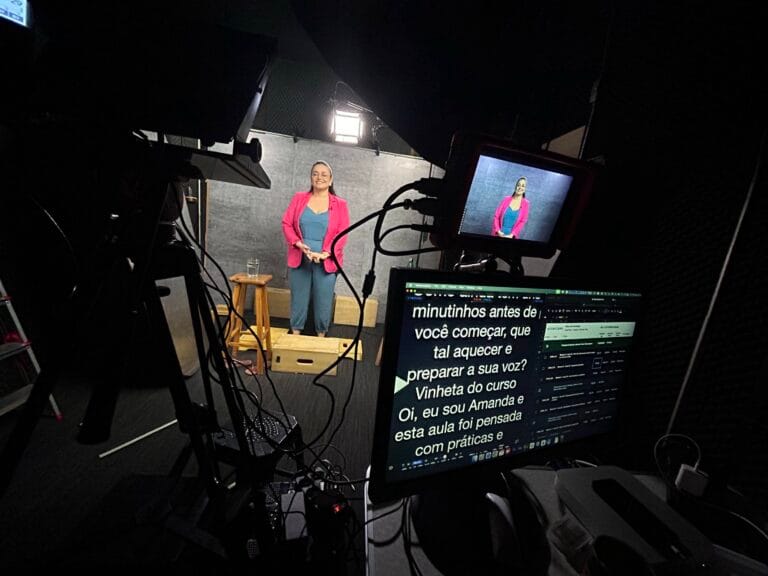
Recorded lessons for online courses, corporate universities, and educational institutions. This is the type of video produced in the highest volume: a course can have dozens or hundreds of lessons.
When to use: Open courses, undergraduate and postgraduate distance learning, corporate university, training for partners and clients.
Example: to the video lessons from +A Educação for the Dom Cabral Foundation and those of Cásper Líbero College.
How much does it cost: An online course with 10 to 30 lessons of 10 to 30 minutes each, recorded over 1 to 4 days, costs between R$ 15,000 and R$ 60,000. Programs with hundreds of lessons and more than 30 hours of content exceed R$ 140,000.
Look How to produce distance learning at scale. and real video or AI avatar.
Videos for relationship building and content.
15. Content for social media
Short, mostly vertical videos, tailored to the specific needs of each platform: Reels, TikTok, Shorts, videos for the LinkedIn feed. They perform best when released in series and frequently.
When to use: Continuous brand presence, behind-the-scenes footage, tips, and longer video clips.
Example: o ZapSign's social media content. Read about short or long videos and How to adapt for vertical.
16. Content and videocast series
Episodes covering market topics, interviews with experts, or videocasts. The goal is to build authority on the subject, and sales follow.
When to use: Companies with technical expertise to share, content marketing strategies, personal branding for executives.
Example: a series on artificial intelligence from XP Educação and the Baptist Network videocast.
17. Commemorative dates
Videos for Mother's Day, Father's Day, Teacher's Day, and the end of the year. They are short and emotional, made for building relationships with clients and team members.
When to use: Communication calendar for networks, internal campaigns, customer relations. See how to use it. commemorative dates in video strategy.
Example: o Mother's Day video from Bernoulli, featuring real testimonies from mothers and children recorded in two cities.
18. Personalized video
A video featuring the name, company, or data of each person, generated at scale from a template. It's attention-grabbing because it appears to be made specifically for the recipient.
When to use: Relationship campaigns, invitations, welcoming clients, prospecting.
Example: o Customized video from Bernoulli for partner schools.. Also check out Smart Take.
How to choose the right type of video
Start by considering what you want to happen after someone watches it.
| If you want that… | Consider |
|---|---|
| A new customer needs to understand who the company is. | institutional or manifesto |
| A client needs to trust before closing the deal. | video case study or testimonials |
| someone understands a complex product | animated explainer or product video |
| many people know the brand | VT, commercial or content for networks |
| A new employee should arrive prepared. | onboarding and integration |
| the team performs the same procedure | training |
| students learn a complete curriculum | video lessons and distance learning |
| The market sees the company as a benchmark. | content series or videocast |
| Let's start an event with impact. | opening video |
To finalize the decision, answer:
- Who's going to watch? Clients, candidates, employees, students, or investors all require different languages.
- Where are you going to watch it? Website, big screen, mobile phone, e-learning platform. The location determines the duration and format.
- What do you need to see to believe? If it's people, record testimonials. If it's something that doesn't appear on camera, animate it.
Recorded, animated, or mixed.
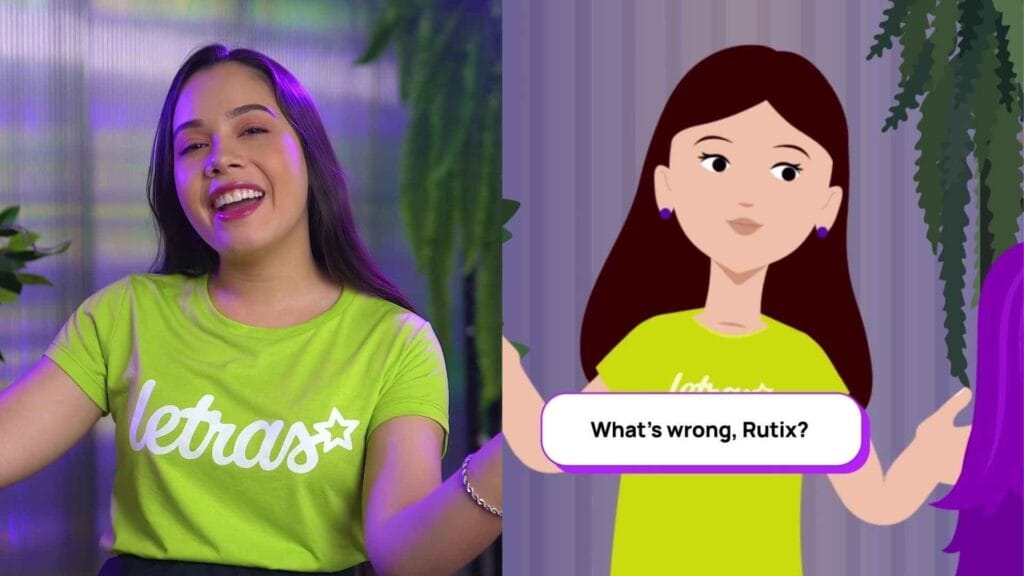
Almost any type of video can be recorded, animated, or a combination of both. The choice depends on what needs to appear on the screen.
| Recorded | Animated | Mixed | |
|---|---|---|---|
| Best for | people, places, operation, emotion | processes, software, data, concepts | when both things matter |
| It depends on | schedule, location, weather, permits | script and visual identity | of the two things |
| Update | requires new recording | easier to adjust | adjusts the animated part |
| Examples | video case, testimonials, VT | explanatory, compliance, system training | institutional, product video |
We delve deeper into this comparison in when to use motion graphics.
One project, multiple types of video.
Many companies commission one video at a time: an institutional video this year, a case study next year. Planned together, the same day of filming can yield:
- the institutional video;
- Short testimonials from employees and customers;
- Vertical cropping for social media;
- an onboarding video with the same interviews;
- Photos for the website and for the press.
That's the logic of a video content plan. Para produção contínua, veja também os pacotes recorrentes.
Common mistakes when choosing the type of video.
Pedir um institucional para resolver um problema de venda. Se o cliente já sabe quem é a empresa e hesita em fechar, outro institucional não ajuda. Ele precisa de prova, que vem de vídeo case e depoimento.
Put everything into one video. História da empresa, lista de produtos, depoimentos, valores e um tutorial no mesmo vídeo viram cinco minutos que ninguém termina. Vários vídeos curtos, cada um com seu objetivo, rendem mais.
Escolher o formato pela referência. Um filme publicitário lindo de outra empresa pode ser a referência errada para um treinamento. Guarde a referência de estética, mas defina o formato pelo que o vídeo precisa fazer.
Esquecer onde o vídeo vai passar. Telão de evento, feed do celular e plataforma de EAD pedem vídeos diferentes. Defina o canal antes do roteiro para não refazer depois.
Gravar sem pensar nas versões. Se a gravação não prevê cortes verticais, depoimentos curtos e uma versão em inglês, cada um desses vira um novo projeto mais tarde. Veja os erros mais comuns em vídeos corporativos.
Frequently Asked Questions
What are the main types of corporate video?
Os mais usados são o vídeo institucional, o manifesto, o vídeo case, o depoimento de cliente, o vídeo de produto, o explicativo animado, o VT publicitário, o onboarding, o treinamento, a videoaula, o conteúdo para redes sociais e o videocast.
What type of video should a company make first?
Pelo maior gargalo. Se os clientes não entendem o que a empresa faz, comece pelo institucional ou pelo explicativo; se entendem e não confiam, pelos vídeos case.
Quando o problema é interno, como treinamento ou integração, comece por ele.
What is the difference between an institutional video and a case study video?
O institucional fala da empresa como um todo. O vídeo case conta um projeto específico com um cliente, com problema, solução e resultado.
Animated or recorded video: which is better?
Depende do que precisa aparecer. Gravação mostra pessoas, lugares e emoção; animação explica processos, software e ideias abstratas. Muitos dos melhores vídeos corporativos combinam os dois.
How much does each type of video cost?
Como referência de mercado, um institucional com gravação (1 vídeo de 2 a 3 min, 1 diária) fica entre R$ 8 mil e R$ 20 mil. Um vídeo animado de até 2 min fica entre R$ 6 mil e R$ 15 mil.
Um vídeo case de 2 a 4 min, com meia a 1 diária, sai por R$ 8 mil a R$ 18 mil. Um curso EAD de 10 a 30 aulas de 10 a 30 minutos, gravado em 1 a 4 diárias, sai por R$ 15 mil a R$ 60 mil.
Veja o guia completo de How much does a video cost?.
How many videos does a company need?
Não existe número certo. Uma empresa pequena pode começar com um institucional e alguns cases. Empresas com universidade corporativa, várias unidades ou presença forte em redes produzem vídeos todos os meses, e um planejamento anual reduz o custo por vídeo.
The type of video is off-topic.
Os 18 tipos se organizam em cinco objetivos. Institucional, manifesto, abertura de evento e lançamento de marca apresentam a empresa. Case, depoimento, produto, explicativo e VT ajudam a vender.
Onboarding, treinamento, compliance e comunicação interna falam com a equipe, as videoaulas ensinam, e redes sociais, séries, datas comemorativas e vídeo personalizado mantêm o relacionamento.
Se você ainda não sabe qual tipo de vídeo resolve o seu problema, Tell me what you need. e ajudamos a escolher.
Publicado em 9 de May de 2024 · atualizado em 29 de September de 2026

Samuel Silva is the co-founder and Creative Director of Silvertake Vídeo, a video production company in Belo Horizonte. He leads a team that combines creativity and technology, delivering over 7,000 videos for more than 100 companies. A graduate in Advertising from PUC Minas, Samuel specializes in marketing, creative automation, and audiovisual production.