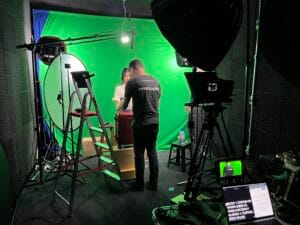

Understand how to structure a corporate video approval workflow in clear steps to eliminate endless rework and protect your project budget.
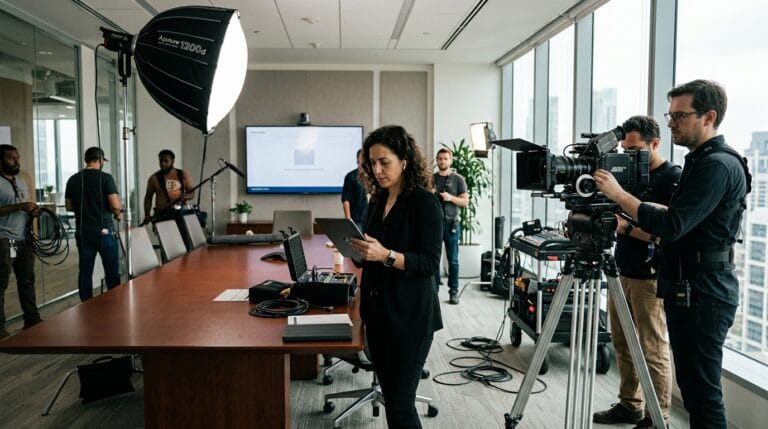
You export the seventh version of a new corporate video. The agency validated the initial cut, the marketing manager gave the green light, and the design team approved the color palette. Then, the link arrives in the board's inbox. The CEO watches it and sends back an email asking to change the central message of the second segment and redo the main interview. The structural problem? The material already has finalized color grading, the soundtrack has been mixed, and the graphic lettering has been applied. Your department's budget has just been exhausted, and the deadline has been missed. Establishing a video approval workflow The only barrier between efficient delivery and corporate chaos is not relying on guesswork.
Treating the validation of a B2B audiovisual asset as a one-off event, performed only at the end of the production line, is a fundamental logistical error. When directors, legal compliance officers, and product specialists offer opinions on the narrative structure of a file that has already undergone hours of machine time for rendering, production ceases to be a technical process. It transforms into an unsustainable spiral of rework. To protect your team and the chosen production company from belated opinions, you need to abandon monolithic deliverables and adopt a framework based on rigorous validation steps.
In the vast majority of companies, the content review process follows a disorganized cascading format. The production company sends a finished file, and the manager sends that same link to five different departments. The legal department points out an obsolete technical term at minute 1:12. Product marketing asks to change a graphic title card at minute 2:05. The sales director suggests a change in the narrator's tone of voice.
The direct consequence of Common mistakes in corporate video production. This completely disrupts the logical workflow. In audiovisual editing, the structure of a piece of material functions like the construction of a building: you don't replace the foundation after the roof has already been installed. Allowing structural adjustments to be made during the aesthetic finishing stage demonstrates a failure in project governance. Predictability requires safeguards.
A robust workflow operates on the concept of "gates" or approval processes. The project simply does not advance to the next stage without the responsible party formally signing off on the validation of the previous step. This safety mechanism educates stakeholders and protects invested capital.
Gate 1: Script and Breakdown (Narrative and Legal Approval)
The project's foundation is laid on paper. This is where the compliance team, technical support, and directors must work at full capacity. A script defines the exact words to be spoken and the scenes to be filmed. Changing text in the document costs nothing and takes five minutes. Changing a recorded voiceover requires mobilizing the studio, voice actor, and sound engineer again. Gate 1 ensures the story is sealed before the camera even starts rolling.
Gate 2: First Cut or Rough Cut (Structural Approval)
After filming, the production company delivers a skeleton of the video. The pacing, the selection of the best interview responses, and the order of the scenes are all in place. There is no final color correction, and the audio has not yet been processed. The approver's role at this stage is to validate the visual narrative. The manager should focus on a single question: does the editing order convey the message approved in the script?
Gate 3: Picture Lock (End of montage changes)
The technical term "picture lock" means that image editing is locked. No new frames are added, and no old frames are removed. This is where the file's timing is frozen. Approval of the picture lock is the dividing line of the project. After this approval, any request to "insert extra director's dialogue" is considered a breach of scope and generates unavoidable additional costs.
Gate 4: Fine Cut and Finishing (Aesthetic Approval)
With the editing locked, post-production professionals step in to finalize the color grading, perform audio mixing, insert the final soundtrack, and apply the entire motion design package. In the final gate, stakeholders exclusively evaluate the technical polish. Feedback here boils down to "increase the track volume" or "adjust the brightness of the final credits." After this validation, the master file is exported.
Having a step-by-step framework is useless if the production company needs to decipher dozens of conflicting emails. If the head of sales asks for a video focused on aggressive conversion and the branding leader demands a purely aspirational and gentle piece, the video editor cannot be the judge of this corporate dispute.
Project governance requires a "Focal Point," typically the marketing manager responsible for the project. This person acts as the ultimate filter between the company and the production company. Before sending any round of feedback to the editing team, the focal point gathers observations from all directors, eliminates obvious contradictions, translates generic guidelines into technical requests, and compiles everything into a single document. The complete video production process. Communication flows quickly when it travels in a two-way and centralized manner.
When the volume and complexity of a project increase, a robust approval workflow is not only recommended, it's the only way for the delivery to survive. In projects of Video for courses and distance learning., For example, the approval logistics dictate the pace of dozens of continuous fundraising days.
A pragmatic example was our work with Dom Cabral Foundation and the +A Education Group. The scope required capturing over 600 masterclass-style lessons. Operating a volume of this magnitude without a rigid framework would be impossible. Set designs, costumes, and animated graphics packages were discussed, designed, and locked into preparatory phases. When the teachers arrived on the recording set, the technical structure had already passed through all the initial validation gates, allowing for total focus on knowledge transmission.
The same level of technical rigor was applied to the construction of the materials for the Cobrape and the Government of Paraíba. When developing project presentation content for government entities, the importance of compliance and technical precision is paramount. Approving scripts, validating the identity of the animations, and locking the narrative cut into closed sequences ensured that the public message was delivered without room for noise or late revisions that could disrupt the public agency's schedule.
Constant friction during the review of B2B materials erodes the energy of your internal team and drains invested resources. Rework is not a natural element of the creative process; it is merely a clear symptom of a non-existent approval workflow. High-performing professionals protect their schedules by establishing clear rules from the project's starting point, ensuring that executives and specialists contribute their opinions at the exact moment their expertise is useful, and not when the machine has already stopped running.
Flawless visual execution only happens on the foundation of organized processes. If your company seeks predictability to scale communication demands, it's essential to work alongside those who understand corporate dynamics from end to end. To structure precise campaigns without structural headaches, Talk to the Silvertake team. and present your audiovisual challenge.
Request a Quote