
Understand the step-by-step process of recording a case study video with your client's client. Discover how to approach the company and conduct a confident B2B interview.
You delivered a project that changed how a company operates. The result motivates the decision to... record video case to provide the marketing team with material evidence.
The business problem starts at the invitation stage. The person sitting in front of the camera isn't the director who signed the contract with you. The person who verifies the functionality of the solution is your client's client.
This testimony will come from the frontline operator, the factory manager, or the data analyst who accesses the system during their daily production routine.
In complex sales, the salesperson's promise carries less weight than the testimonial of a frontline user. Institutional speeches lose effectiveness when faced with clearly documented examples.
One video case study focused on results. It transfers the authority of the problem solver directly to the lead. The difficulty is that this person from operations avoids formal interviews and public exposure.
If the sales team asks marketing for a favor, the response is usually a full schedule. The lead generation process requires strategy and a planned approach.
A common mistake in communication is requesting the recording as a concession of time. The solution is to position the action as a co-marketing project capable of highlighting the partner's management work in the market.
The goal is to showcase the internal team's ability to implement the tool. In the final narrative of the audiovisual material, the hero of the video is the partner, not the product.
To eliminate negative feedback, reduce operational demands. The audiovisual production company should not disrupt the company's routine. The interviewee reserves a short slot in their schedule, and the technicians handle the execution.
Sending a script with the exact lines takes away the naturalness of the interview. The professional enters the set trying to remember the phrases approved by the management, leaving the testimony with a rehearsed tone.
The productive approach is to schedule a fifteen-minute video call two days before filming. In this conversation, the director maps out the storylines and notes the professional's actual vocabulary.
During live recording, speech flows freely. To enhance this dynamic on set, see the guidelines on... How to direct video experts corporate and maintain comfort in front of the camera.
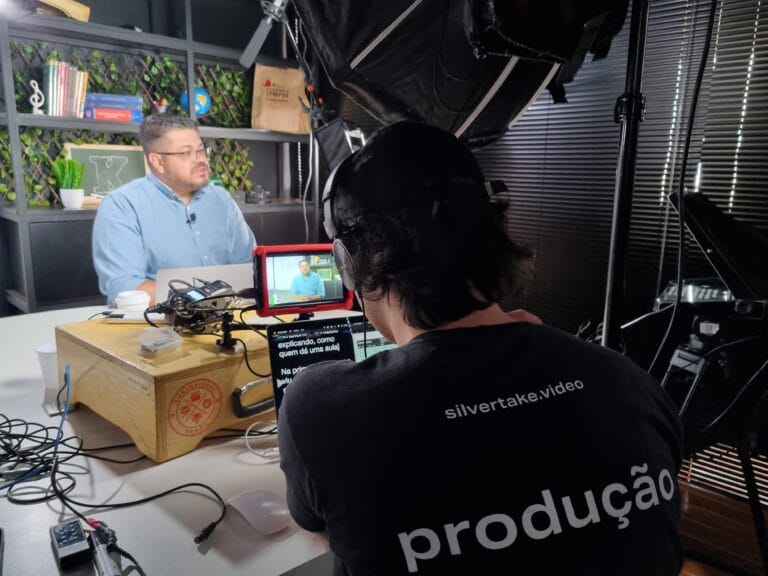
Filming in another organization's office or factory requires a quiet setup. Industrial spotlights, large tripods, and heavy equipment can obstruct the physical space and make the interviewee feel withdrawn.
The selected equipment needs to be compact. This involves smaller LED lights, inconspicuous lapel microphones, and a lean team. The interview takes on the profile of a conversation, and the lenses integrate into the normal environment of the meeting room.
If the montage needs more graphic resources to create rhythm, organize one. Multi-camera setup for interviews that covers different angles of the person without crowding the workspace.
When recording, the interviewer dispenses with the clipboard of short questions. The client should describe, in a descriptive format, the production bottlenecks they faced before acquiring the solution.
Next, the person describes how the routine changed after the implementation was completed. Waiting silently after the professional speaks helps the testimony flow smoothly.
When the client finishes their thought, the interviewer waits two seconds before starting the next question. This pause facilitates cuts in the editing suite.
The raw footage yields long minutes of recording that require processing. Editing cuts out redundancies to construct the final file with only the best responses captured by the cameras.
Avoiding a rigid timeline prevents video abandonment. Organize the professional's speech into three documentary blocks:
Conducting recordings between headquarters and corporate clients requires mastery of field logistics. An example of this application is the setup of... TrueChange video case at MRS Logística.
The technical team went to the railway network to document the integration of a low-code system. The main topic did not focus on the software screens, but rather on detailing the working hours gained by the manager.
We installed cameras in industrial areas, captured the perspective of industry leaders, and cross-referenced direct testimonies with images of the daily operation of the locomotives.
Another demanding team move took place in the production of Company 1.
We traveled to document the installation of the public transportation ticketing system in several municipalities. The interviews and footage taken in the bus garages allowed the municipalities to operate normally.
Management paying attention to workplace schedules results in the creation of a marketing video Formatted for prospecting clients.
Lead conversion motivators are inherent in the routine of those who use the platform to meet productivity goals. Scaling this process requires professional audio and video capture, without putting pressure on the corporate partner's pace.
Recording results in high resolution prevents shaky, amateurish footage from negatively impacting the perceived average ticket price associated with the brand.
Bring the visual requirements of your operation. Send a briefing to Silvertake. And we're going to structure the team to document the stories that will bring in the next contracts.
Request a Quote